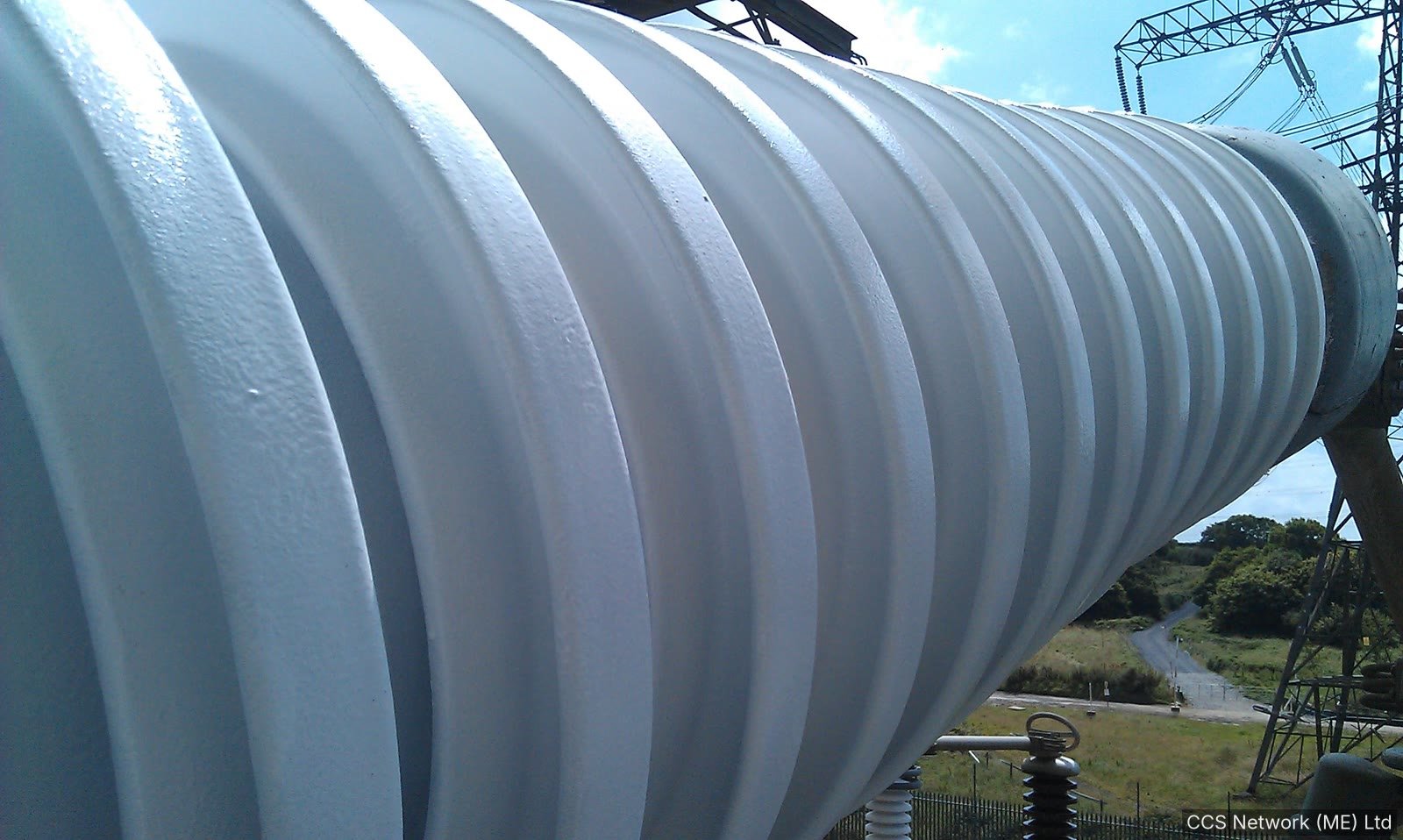

Technical presentation · Utility and asset engineers
Si-COAT 570 RTV silicone HVIC for preventing pollution flashover
How a durable water-repellent coating suppresses leakage current on high-voltage insulators.
 CCS NetworkSi-COAT 570 · RTV silicone HVIC
The problem
How pollution flashover develops
Contamination
Salt, dust or industrial deposits settle on the insulator surface.
Water film
Fog, dew or light rain wets the deposit into a continuous conductive film.
Leakage current
An ionic solution forms and current flows across the surface.
Dry-band arcing
Current heats and dries local bands; arcs bridge the gaps.
Flashover
Arcs extend and join until the whole insulator flashes over.
CCS NetworkSi-COAT 570 · RTV silicone HVICWhere it happens
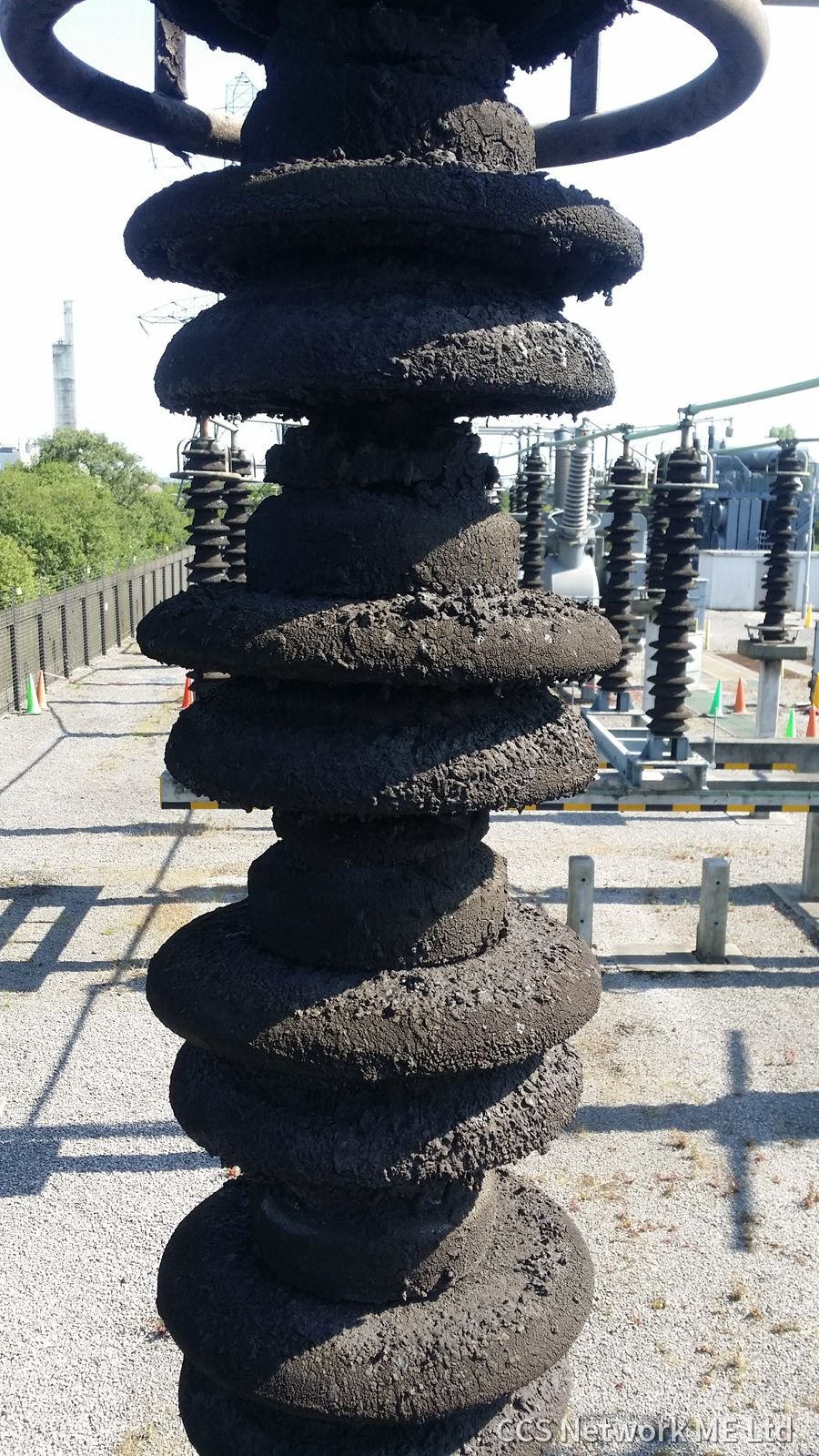
Pollution environments that drive flashover
Any deposit that turns conductive when wet can start the sequence. These are the environments documented in the sources and the Si-COAT 570 data sheet.
Saline
Ocean spray, salt fog and coastal winds
Coal and fly ash
Power-station and coal-handling dust
Cement
Cement and other cementitious dusts
Metal ores
Ore handling and steelworks, e.g. iron ore
Petrochemical
Refinery and chemical-plant emissions, acid emissions, carbon black
Desert sand
Wind-blown sand deposits
 CCS NetworkSi-COAT 570 · RTV silicone HVIC
Usual fixes
Washing, greasing, more creepage: and their limits
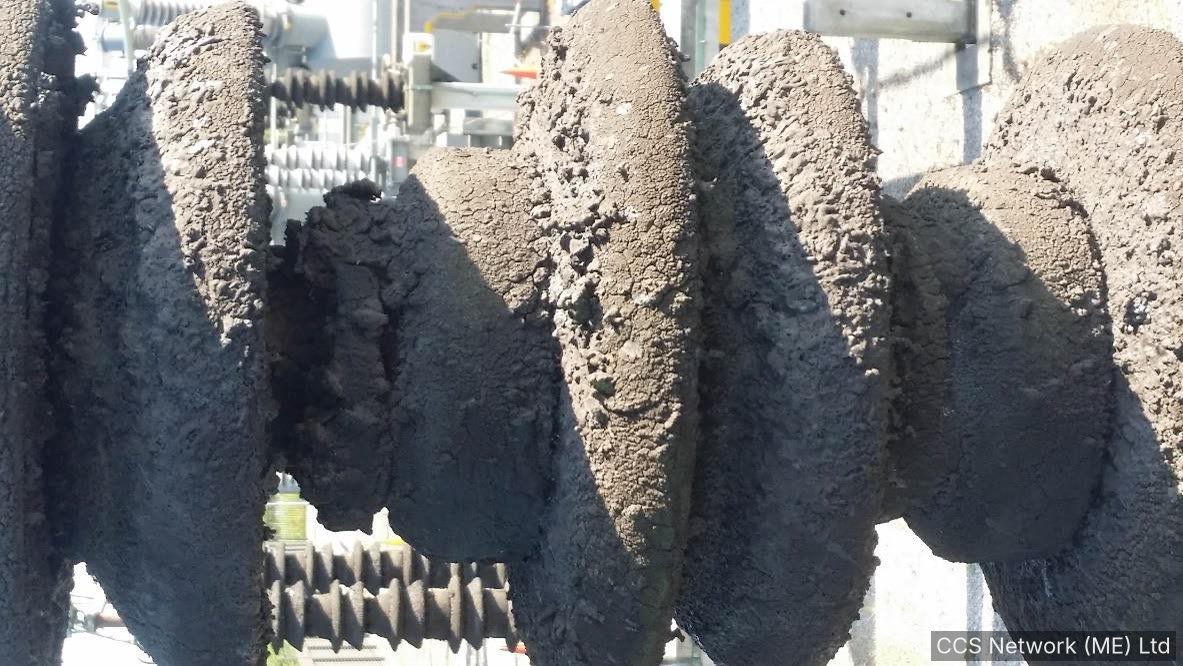
Water washing
Repetitive and expensive in the long term. Protection lasts only until the deposit builds up again.
Greasing
Grease becomes saturated with pollution and has to be removed and replaced. Removal is messy: scraping, abrasive and solvent.
Added creepage / new insulators
An expensive option that only delays the time to flashover rather than stopping the mechanism.
The common thread: each method has to be repeated or only postpones the problem. None changes how water behaves on the surface.
 CCS NetworkSi-COAT 570 · RTV silicone HVIC
The Si-COAT 570 answer
One durable, water-repellent coating
A single-component, ready-to-use, room-temperature-vulcanising, moisture-cure, high-build polysiloxane coating, made by CSL Silicones Inc. Applied once at about 0.5 mm, it changes how water behaves on the insulator for the life of the coat.
- Glass, porcelain and polymer insulators; AC and DC; all substation voltages
- Typically ~10 years in heavy pollution, then overcoat without removal
Sustained hydrophobicity
Water beads, it does not film
Hydrophobic recovery
LMWS oils replenish the surface
Pollution encapsulation
Deposits become water-repellent
Arc-track resistance
Patented ATH filler
Weather and UV resistance
Stable Si–O backbone
 Manufactured by CSL Silicones Inc.CCS NetworkSi-COAT 570 · RTV silicone HVIC
Sustained hydrophobicity
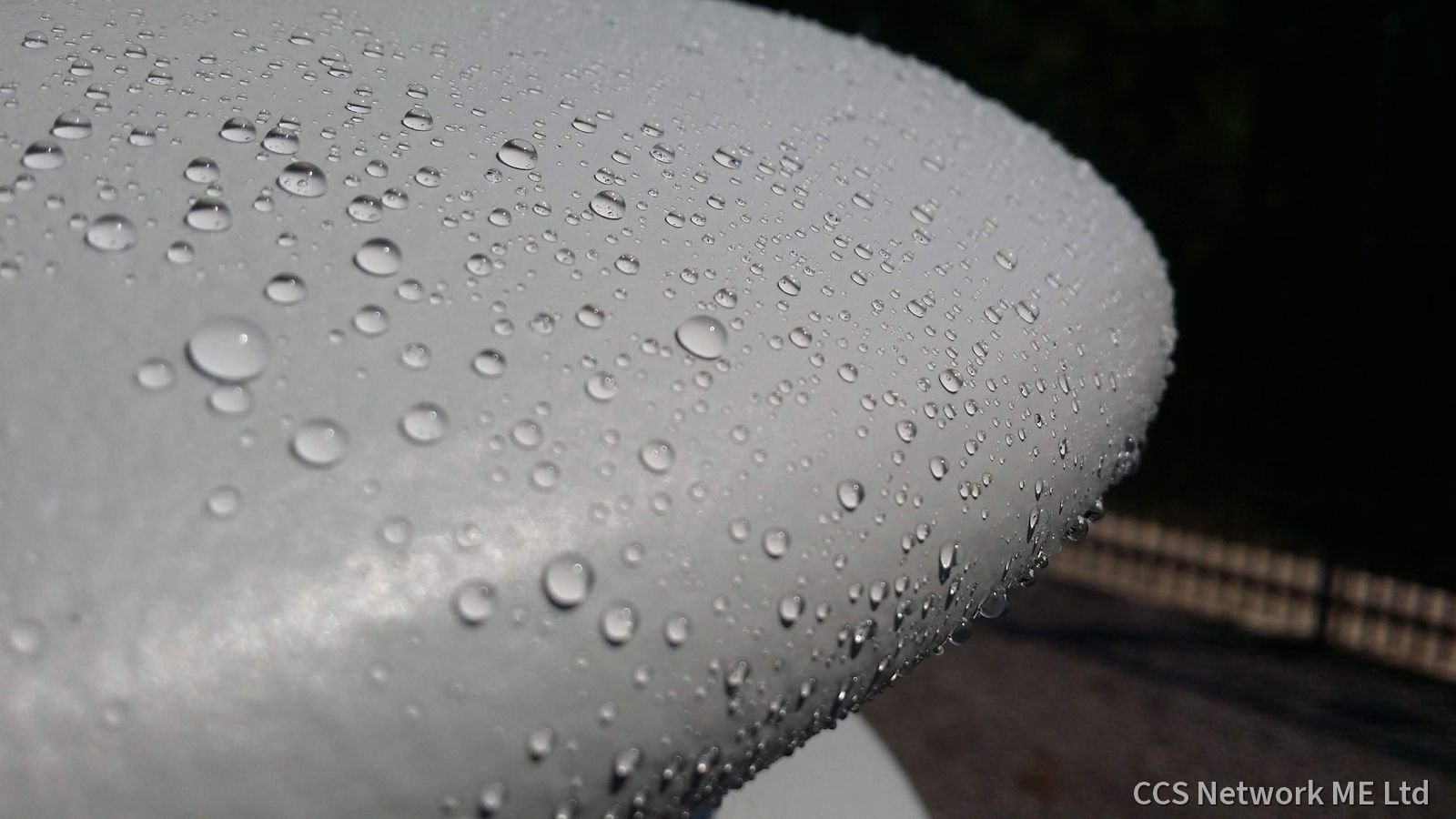
Water beads instead of filming
Discrete droplets cannot join into a continuous conductive layer, so contaminants do not dissolve into an ionic film and leakage current stays suppressed.
Water-repellency angles to IEC 62073, typical values from the Si-COAT 570 TDS (27 Nov 2023). A surface above 90° is classed as hydrophobic.
 CCS NetworkSi-COAT 570 · RTV silicone HVIC
Hydrophobic recovery
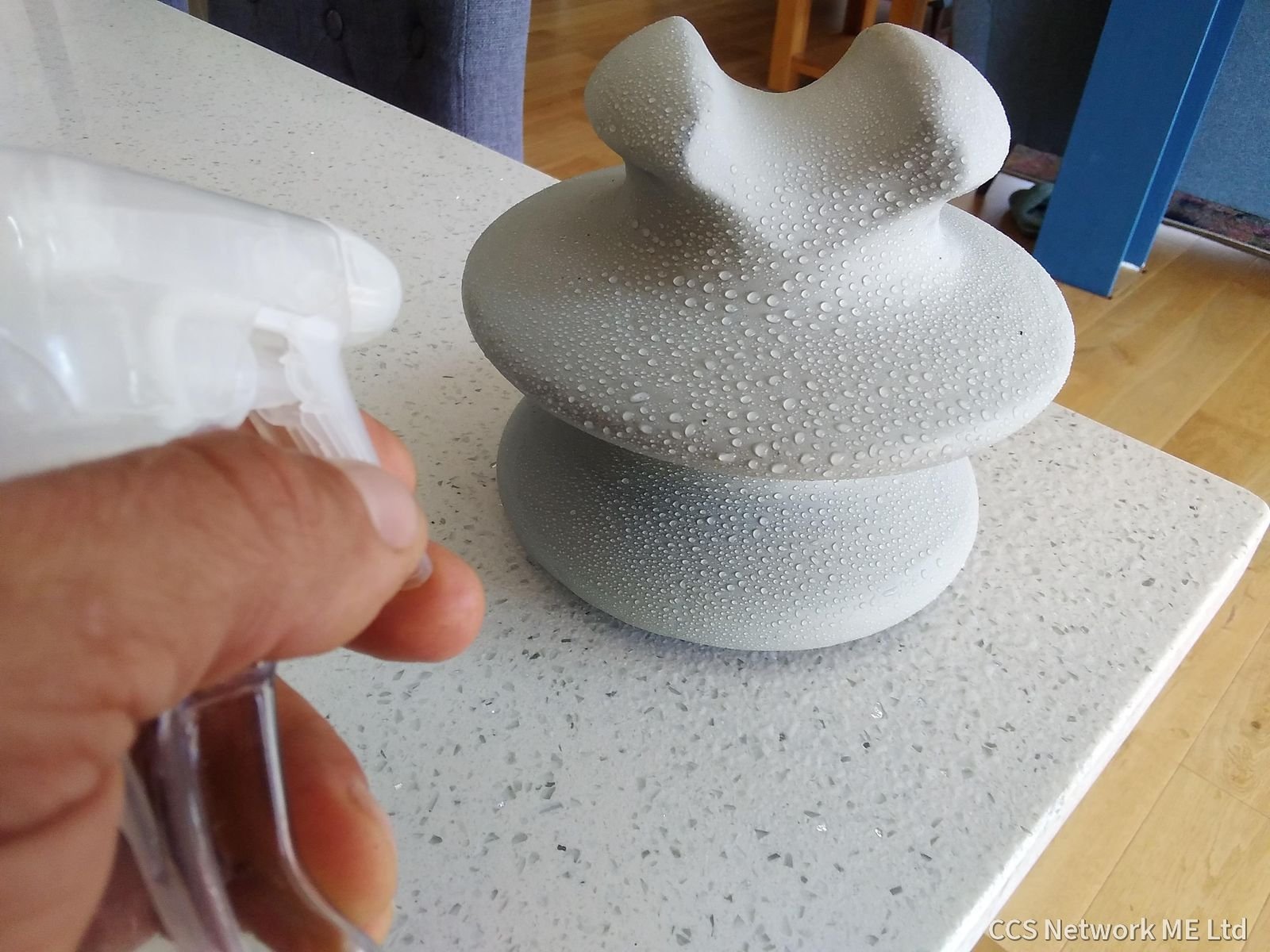
Hydrophobicity comes back after corona or storms
1 · In service
Surface beads water; LMWS present at the surface.
2 · Corona or heavy storm
Surface hydrophobicity is temporarily reduced.
3 · Recovery
LMWS oils migrate from the bulk and replenish the surface.
4 · Restored
Beading returns without cleaning or intervention.
 CCS NetworkSi-COAT 570 · RTV silicone HVIC
Low molecular weight silicone (LMWS)
LMWS oils migrate to the surface
LMWS microlayer
Free silicone oil at the surface keeps it water-repellent.
LMWS in the bulk
Mobile low molecular weight silicone migrates upward through the cured coating.
ATH filler
Inorganic filler particles in the silicone network (next slides).
Substrate
Si-COAT 570 bonds to glass, porcelain and polymer.
CCS NetworkSi-COAT 570 · RTV silicone HVICPollution encapsulation
The pollution layer itself becomes hydrophobic
Uncoated or wettable surface
Water wets the deposit, dissolves the soluble salts and forms a conductive ionic film.
With Si-COAT 570
LMWS oil migrates into and around each particle, so the deposit takes on the coating's water-repellency.
CCS NetworkSi-COAT 570 · RTV silicone HVICATH filler · arc-track resistance
ATH protects the coating during electrical activity
How it works
Dry-band arcing heats the alumina trihydrate (ATH). It releases water, absorbing the arc energy and restricting surface tracking and erosion.
Inclined-plane tracking and erosion, IEC 60587
Patented, optimally sized ATH: about 13 µm per the TDS; CSL lab statement (28 May 2018) 10–20 µm, not less than 25% by weight. Typical TDS values (27 Nov 2023), not specifications.
CCS NetworkSi-COAT 570 · RTV silicone HVICUV and weathering durability
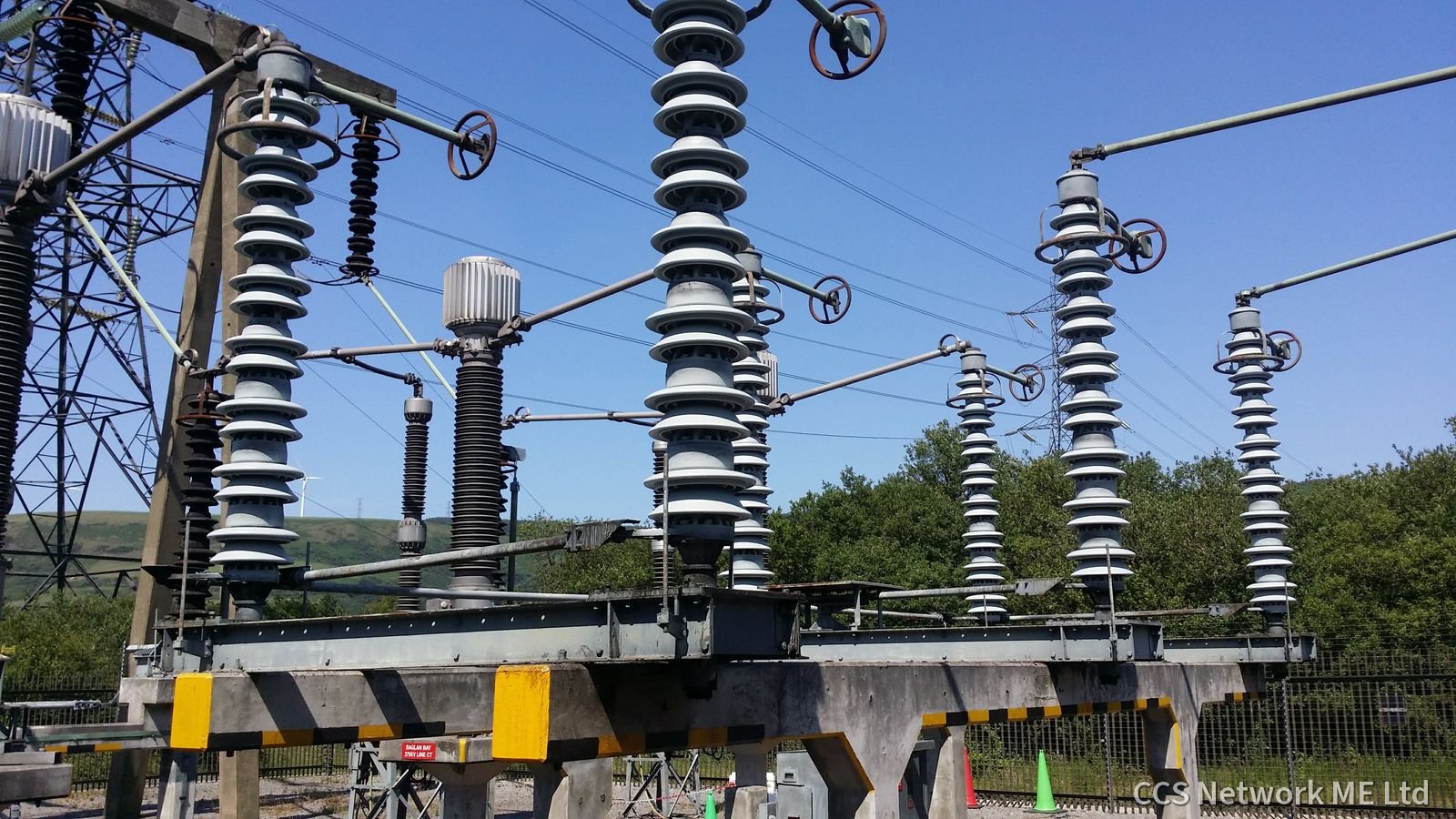
Built on a bond that sunlight cannot break
The silicone Si–O bond needs more energy to break than a 300 nm UV photon carries. Carbon-backbone organic elastomers are less stable.
 CCS NetworkSi-COAT 570 · RTV silicone HVIC
Excellent adhesion
Bonds unprimed to the insulators you already have
Applied direct to clean, dry surfaces with no primer:
IEEE 957
CEA LWIWG-02
- A primer may be used on porous substrates or to improve adhesion
- Can refresh old RTV silicone HVIC that is cleaned and still well adhered
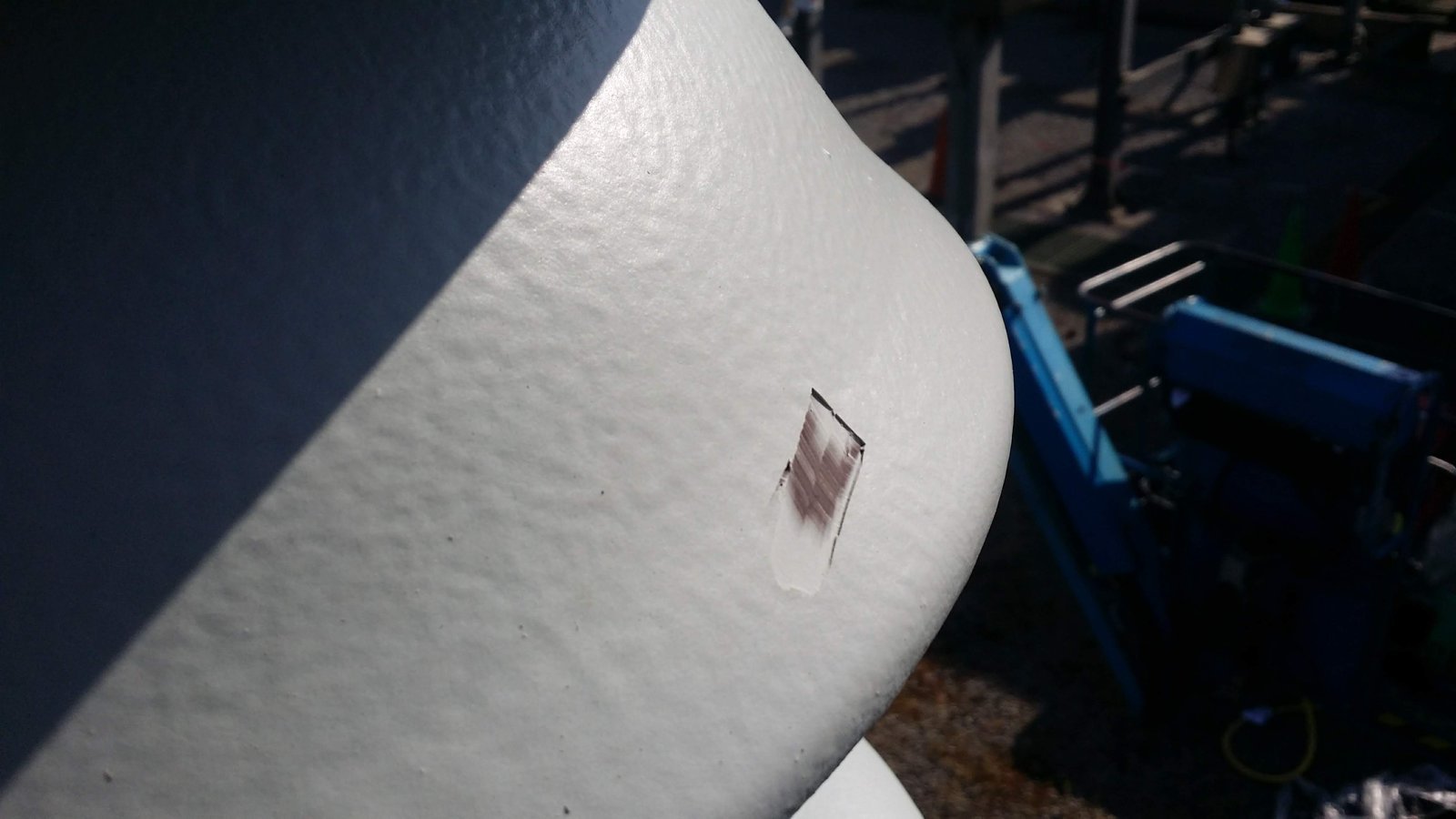
- Field check: a small coupon is cut and lifted; resistance confirms adhesion
 CCS NetworkSi-COAT 570 · RTV silicone HVIC
Good application properties
Ready to use, quick to build, easy to apply
Ready to use
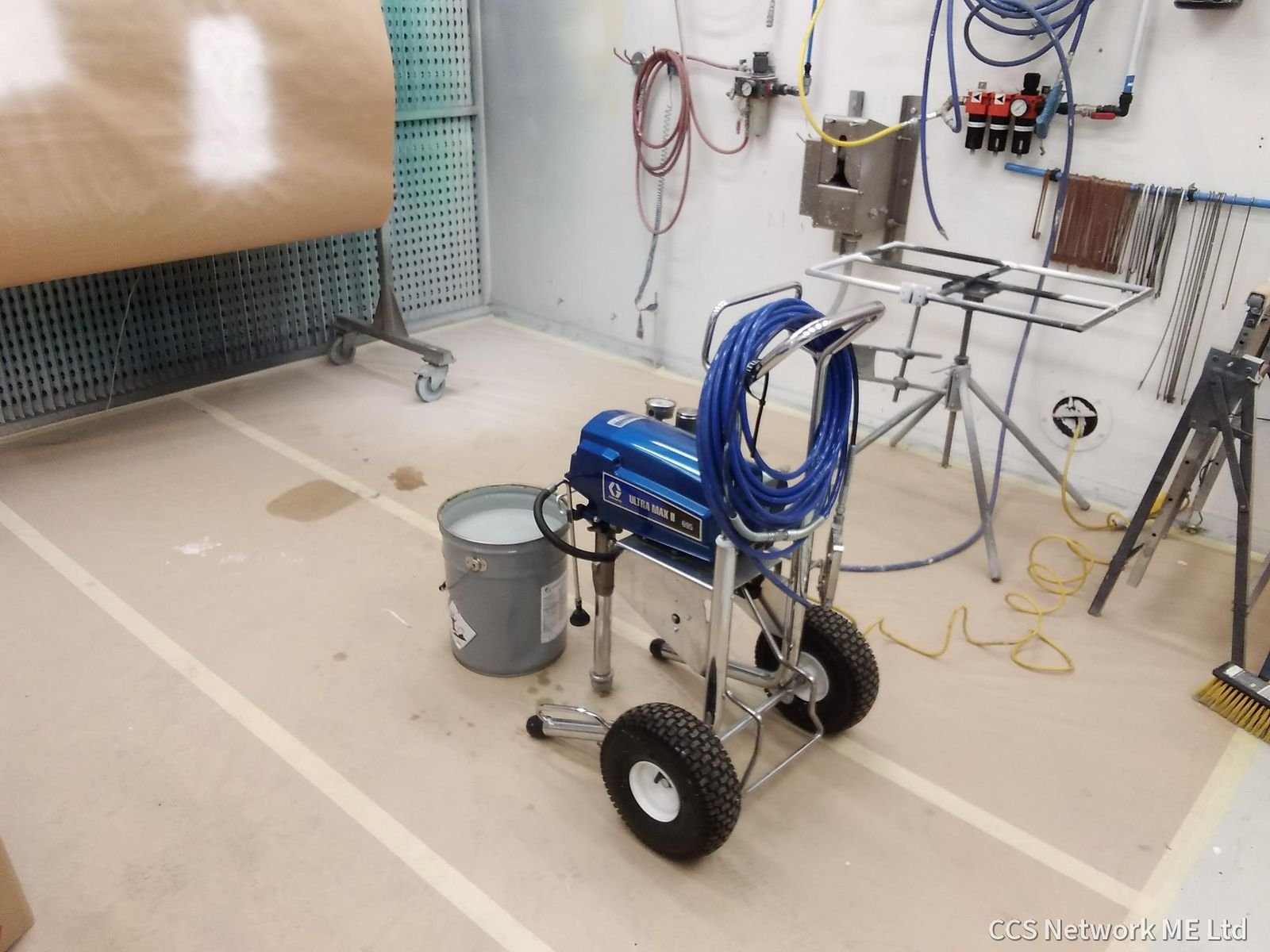
Single component. No mixing beyond a light remix if solids have settled.
Quick film build
High viscosity (1,350 ± 350 cP) builds thickness with fewer drips and runs; high solids, 57% by volume, limit weight loss on cure.
Flexible application
Airless air-assisted spray (recommended), or brush and roller.
Fast cure
Skin-over 20–25 min, tack-free 30–40 min, cure through 6 h (25 °C, 50% RH).
Overcoat later
Can be overcoated without removing the original coat.
Two standard colours
Clay grey or white.
 CCS NetworkSi-COAT 570 · RTV silicone HVIC
Test results at a glance
Si-COAT 570 typical properties
reviewed 27 November 2023. Not specifications.
| Property | Typical value | Method |
|---|---|---|
| Dielectric strength | 276.3 kV/cm (701.8 V/mil at 16.1 mil) | ASTM D149 |
| Volume resistivity | 3.48 × 10¹⁶ Ω·cm | ASTM D257 |
| Surface resistivity | 1.36 × 10¹⁶ Ω/□ | ASTM D257 |
| Dielectric constant | 2.74 at 100 Hz; 2.63 at 100 kHz | ASTM D150 |
| Dry arc resistance | Track 184 s; burnout >450 s | ASTM D495 |
| Water-repellency angle | Static 121.3°; advancing 121.4°; receding 104.4° | IEC 62073 |
| UV and salt-fog ageing | No degradation after 5,000 h | IEC 61109 |
| Tracking and erosion | PASS: 1A 4.5; 1B 4.5 | IEC 60587 |
| Tracking wheel withstand | >1,000 h | CEA LWIWG-01 |
| Adhesion, water blast | PASS | IEEE 957 |
| Adhesion, boiling water 100 h | PASS | CEA LWIWG-02 |
| Temperature stability | −40 to 250 °C | TDS |
CCS NetworkSi-COAT 570 · RTV silicone HVICProven in service
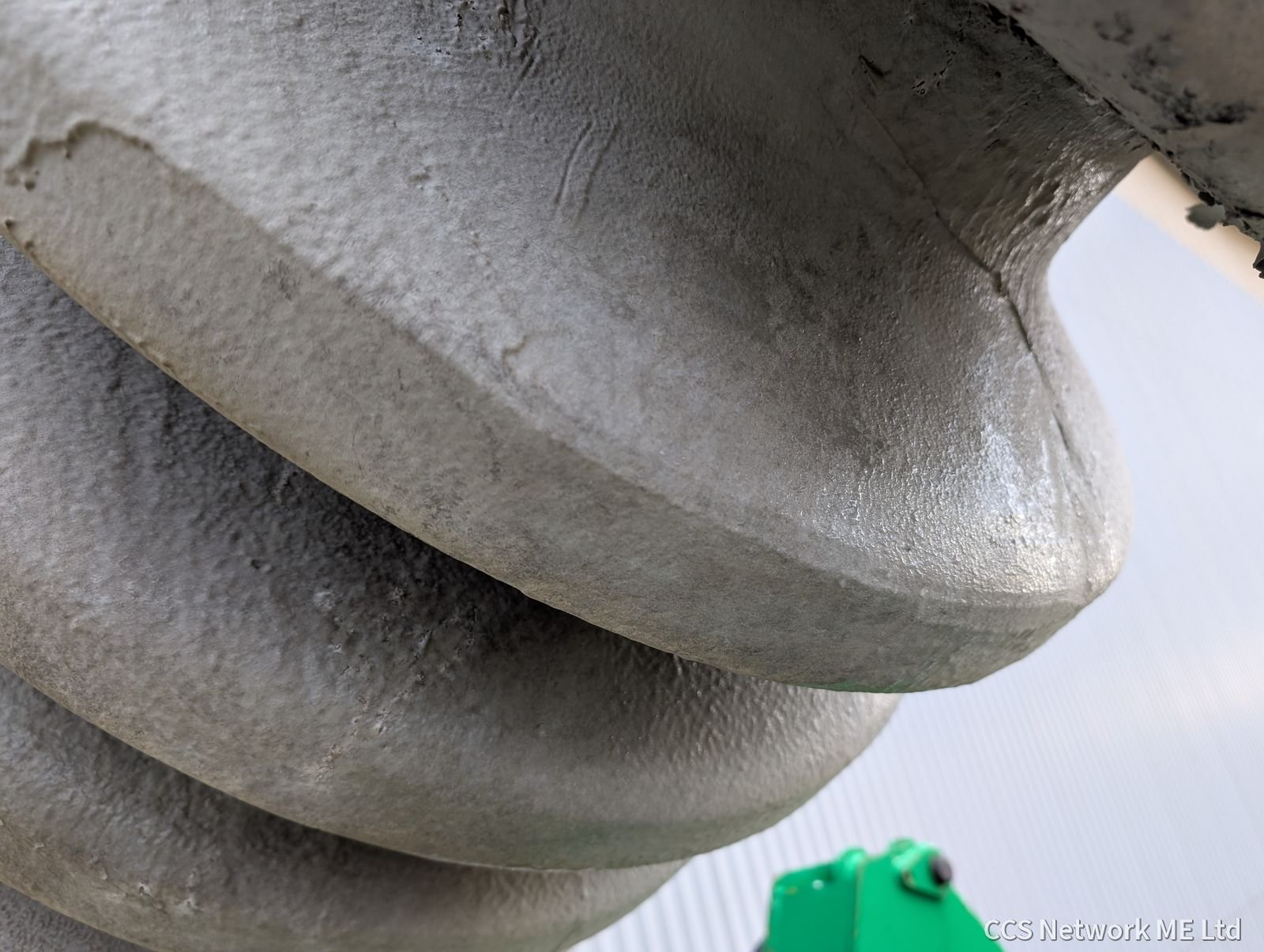
From polluted sheds to a smooth, water-repellent finish
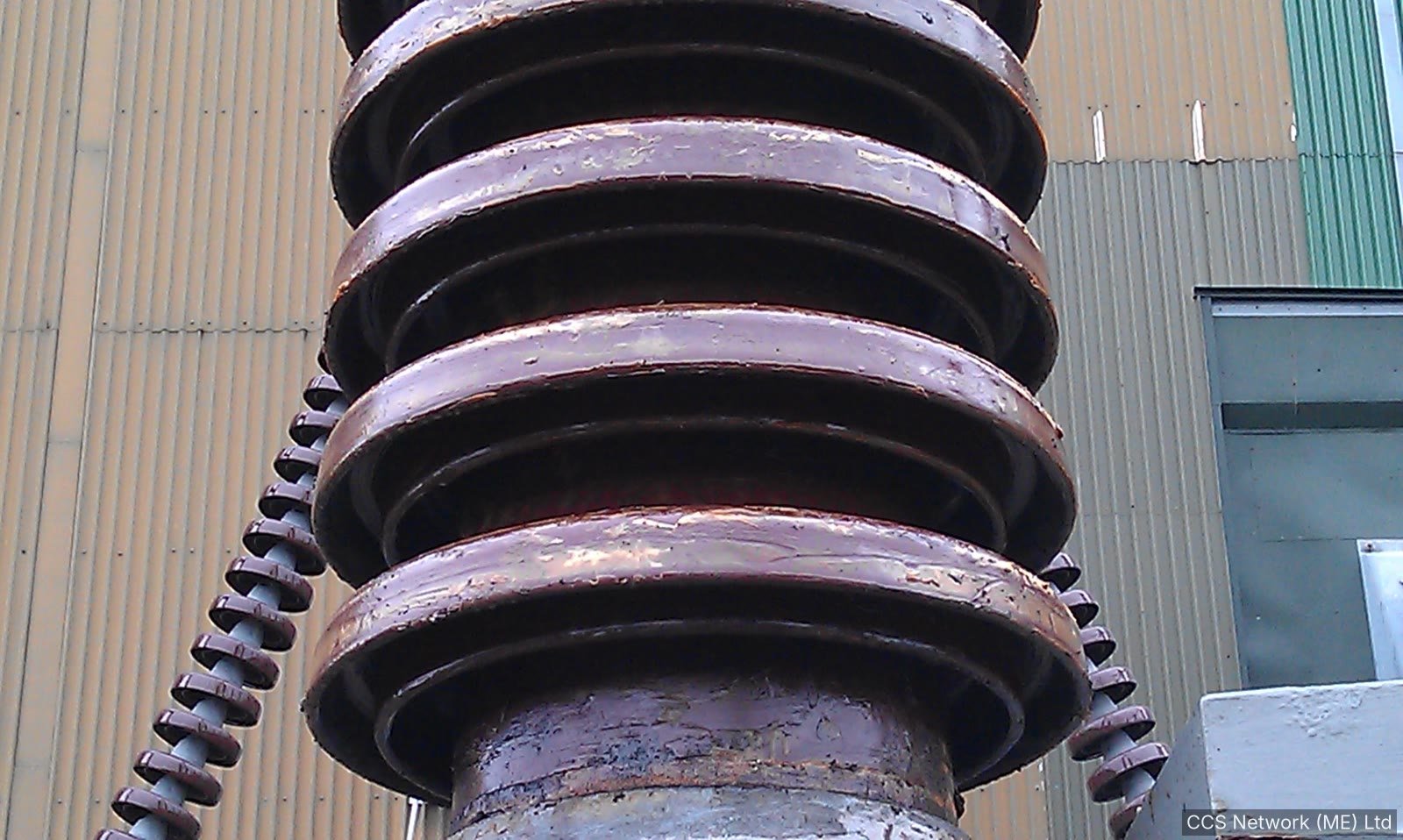
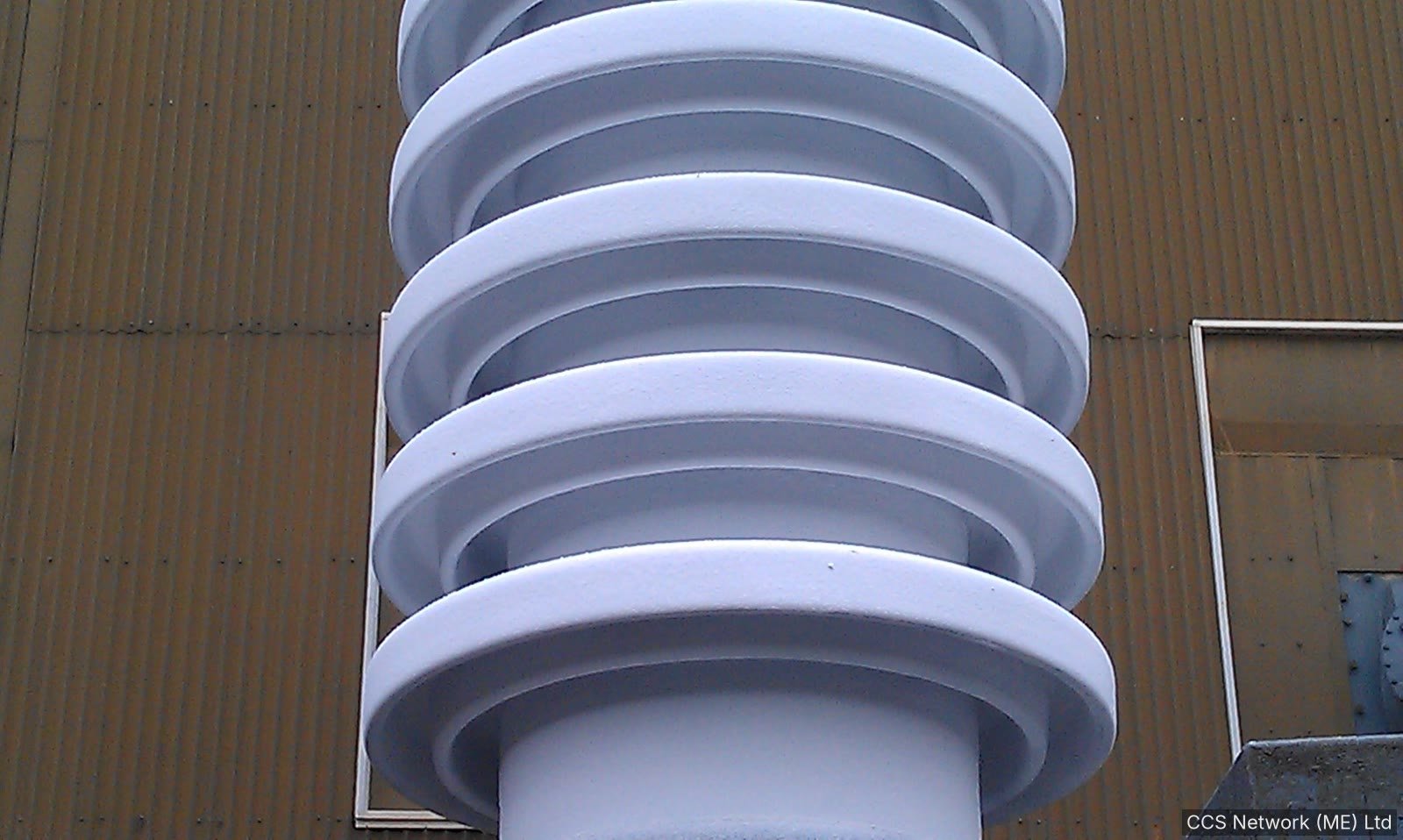
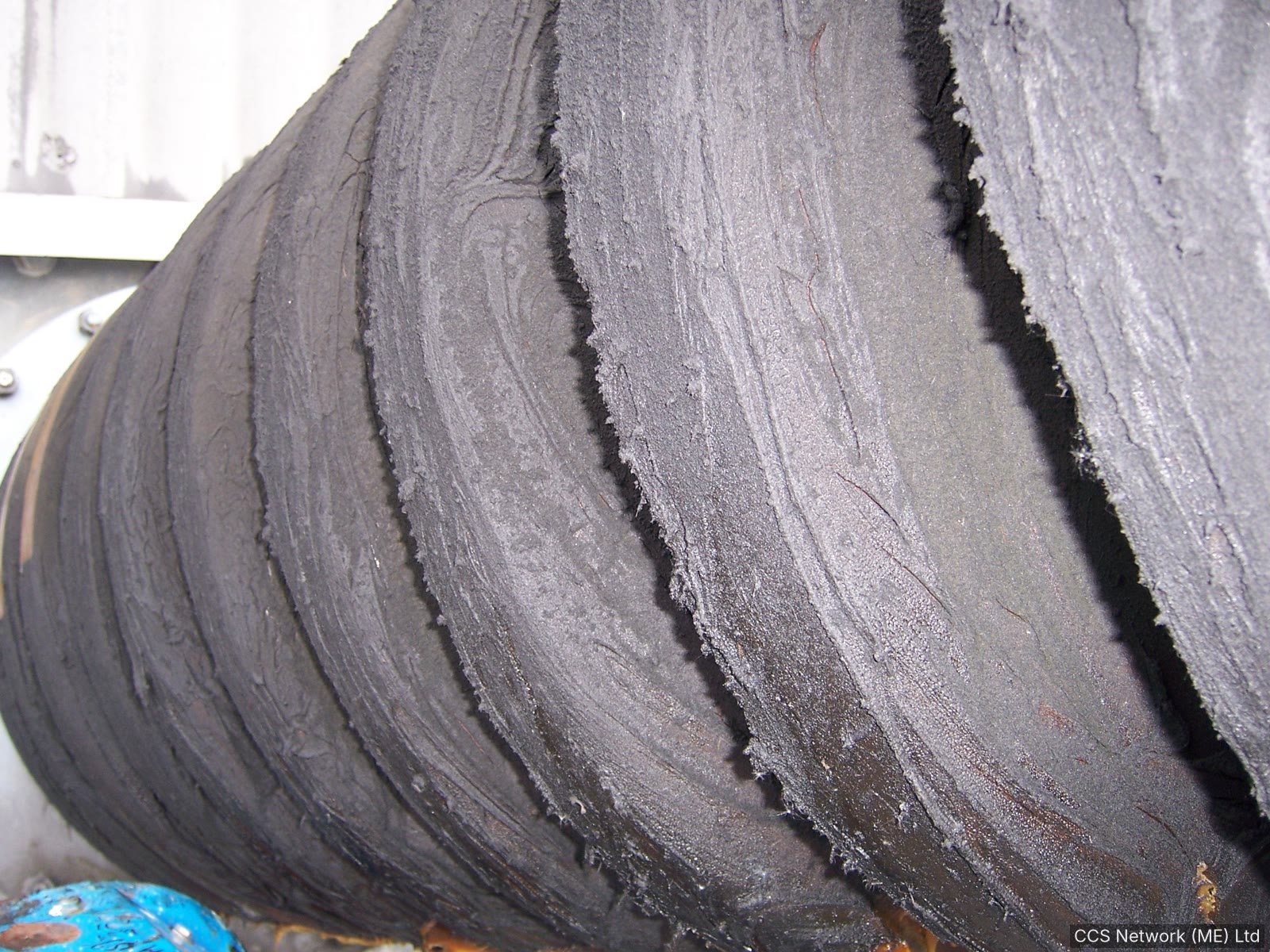
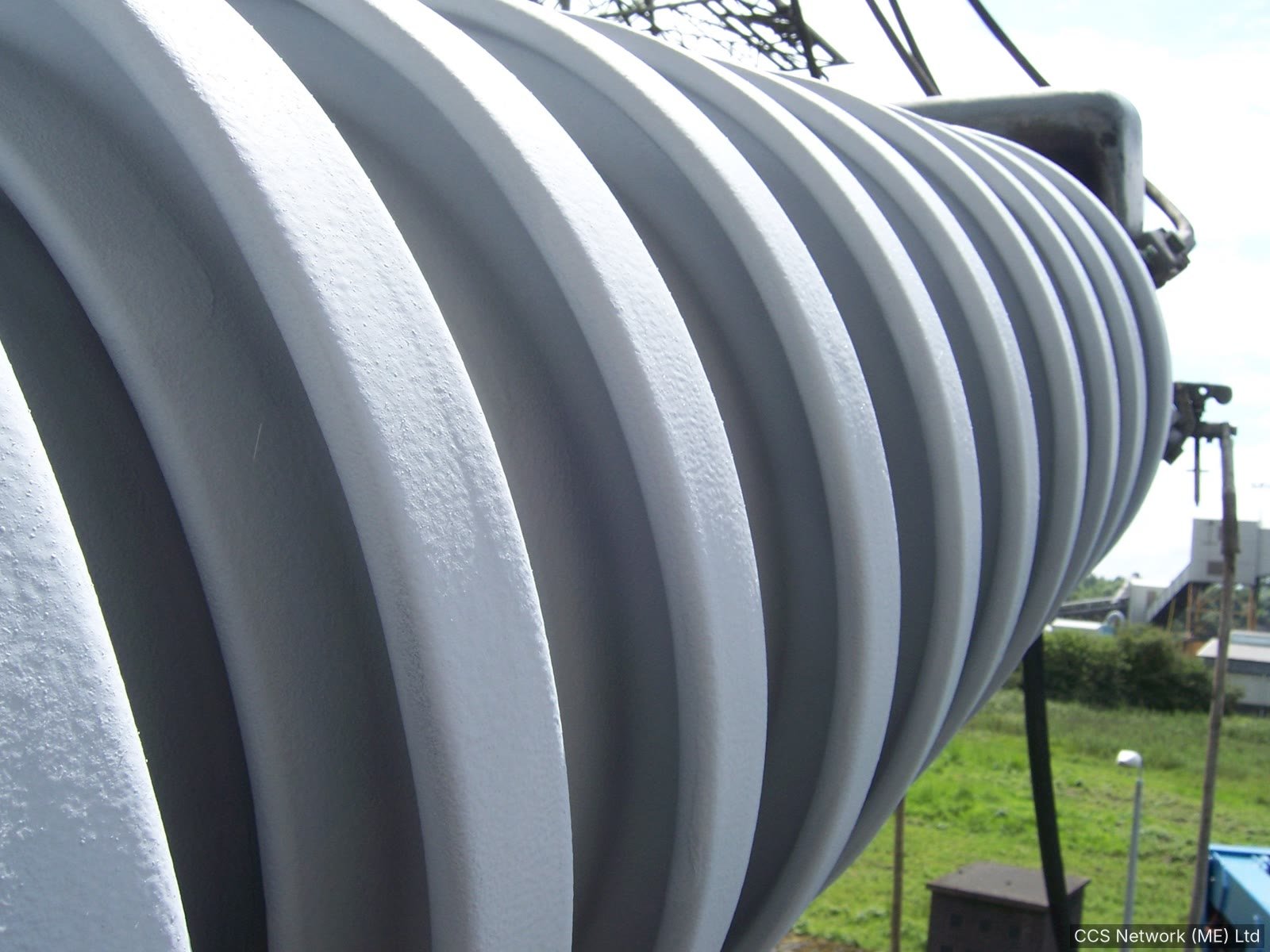
*Field follow-ups of earlier RTV silicone HVIC applied by CCS (case studies, ccs-network.com). Photos: RTV silicone HVIC finished coats applied by CCS. Work up to 400 kV.
CCS NetworkSi-COAT 570 · RTV silicone HVICSupply
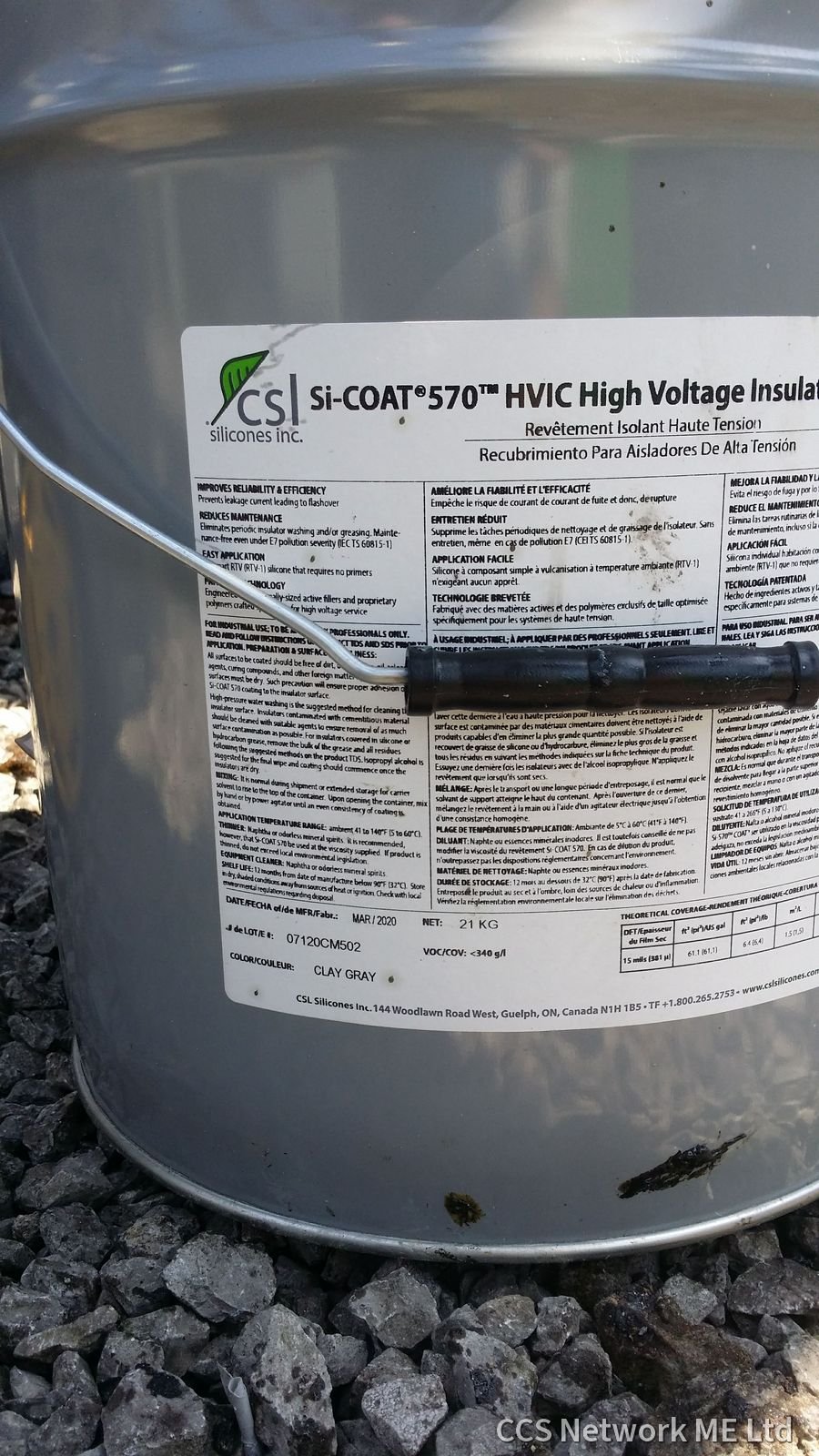
Getting Si-COAT 570
UK stock
Available from CCS stock in the UK, for delivery or EXW collection.
Direct from CSL
Larger or international orders ship direct from CSL Silicones, with lead times quoted at enquiry.
Supply only, or supply and apply
Buy the product, or have CCS apply it to the TDS and IEEE 1523 thickness guidance.
Colours
Clay grey or white
Pack sizes
1, 2.5, 5 and 50 US gal
Shelf life
12 months unopened, stored below 32 °C
Documents
TDS and SDS supplied; application guidance available
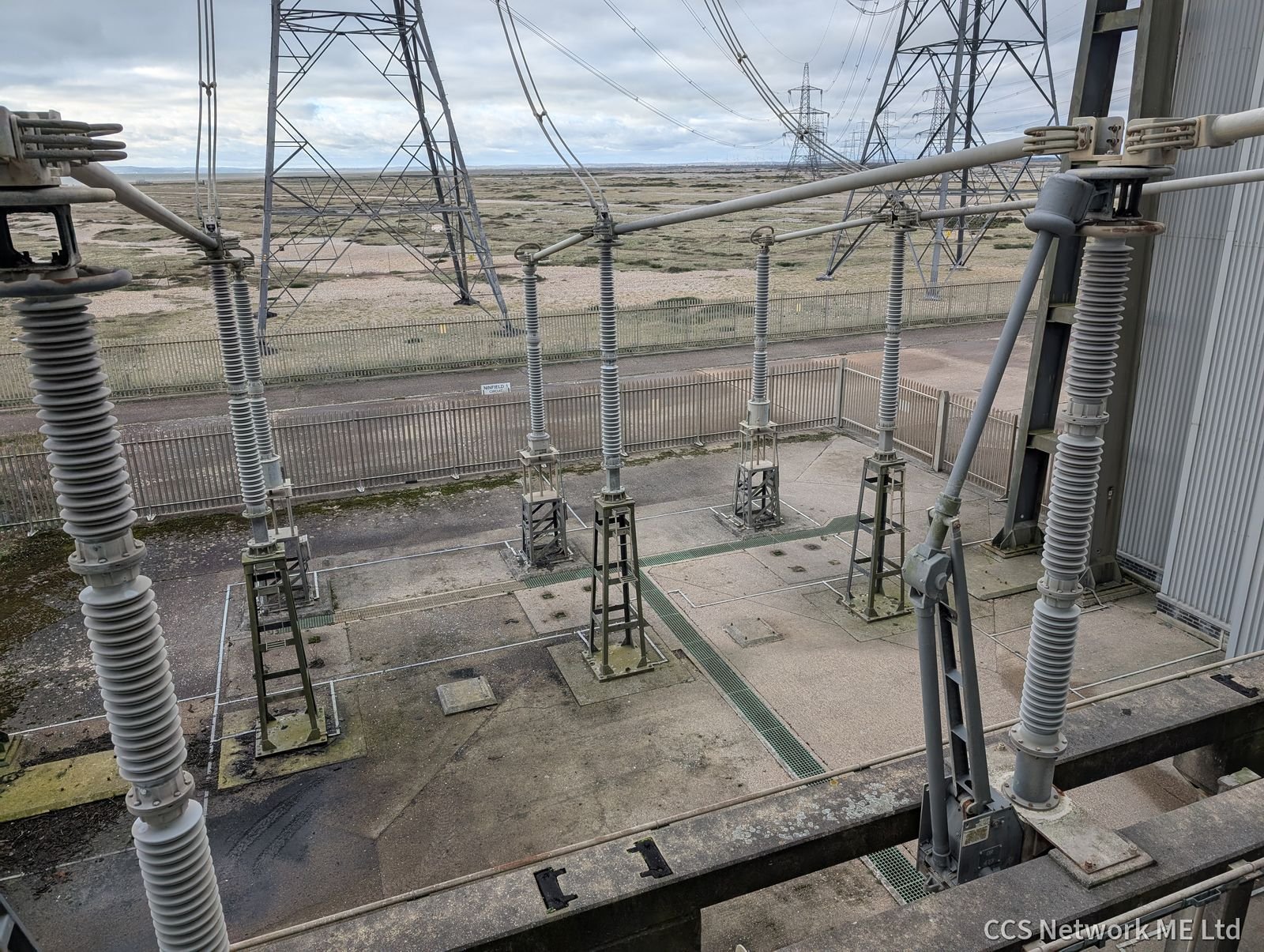
Talk to us
Site survey, application or product supply
Talk to the applicators about your site, your pollution and your insulators.
07837 186649
CCS Network (ME) Ltd · The Old Tilmanstone Colliery, Pike Road Industrial Estate, Tilmanstone, Dover, Kent CT15 4ND, United Kingdom