
Survey and condition assessment — National Grid coastal substations
The challenge
A coastal National Grid substation collects salt on every shed. Some sites still wash, some still grease, and many already carry RTV silicone HVIC that has been in the weather for a decade. Deciding whether to overcoat, to strip back, or to stop washing is a condition question. It needs a survey, not a guess.
The solution
Through 2021 and 2022 CCS surveyed seven coastal substations for National Grid. Grain, 25 June 2021: the automated wash had flashed over while it was running, and the recommendation was to deactivate it and apply RTV silicone HVIC. Heysham, 17 August 2021: 400 kV current transformers coated in 2002–2005, with only SGT2 overcoated in 2011. Hinkley Point, 17 and 18 September 2021: saline yards with water wash, grease and RTV silicone HVIC side by side. Dungeness, 28 September 2021: in-service RTV silicone HVIC, with SGT1 hydrophobicity at HC1 to HC2. Aberthaw, 21 June 2022, Blyth, 24 June 2022, and Pembroke, 20 October 2022: the majority of the coated equipment had given reliable maintenance-free protection for more than 10 years.
The result
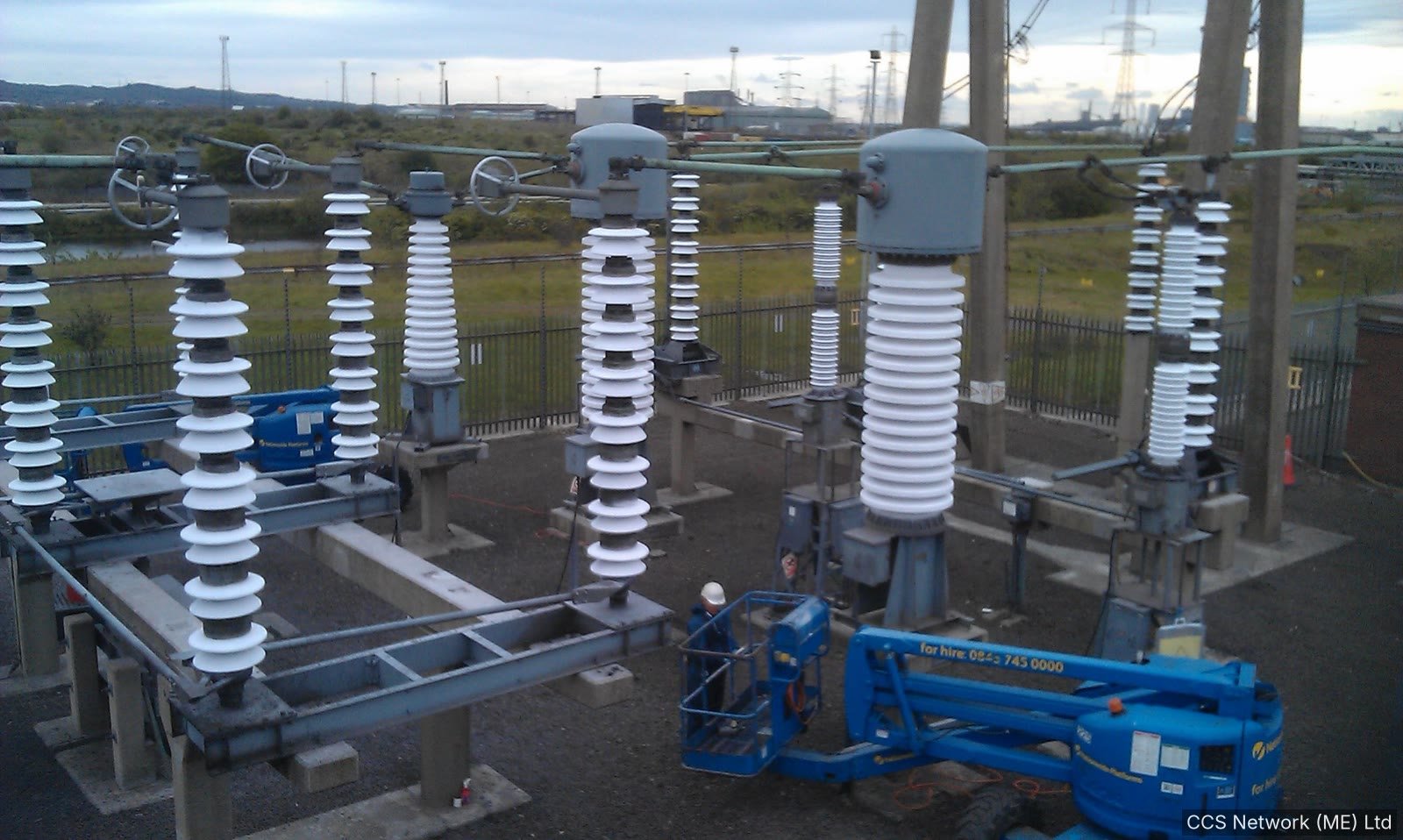
The programme is the case for survey before the next outage. Where RTV silicone HVIC has already served for more than 10 years, the next step is a clean and an overcoat. Where a wash or a grease is still the protection, the survey names the change: RTV silicone HVIC, and the washing or the greasing comes off the plan. The photograph is in-service coated posts at Dungeness on the day of the 2021 survey.
CCS Network (ME) Ltd. www.ccs-network.com